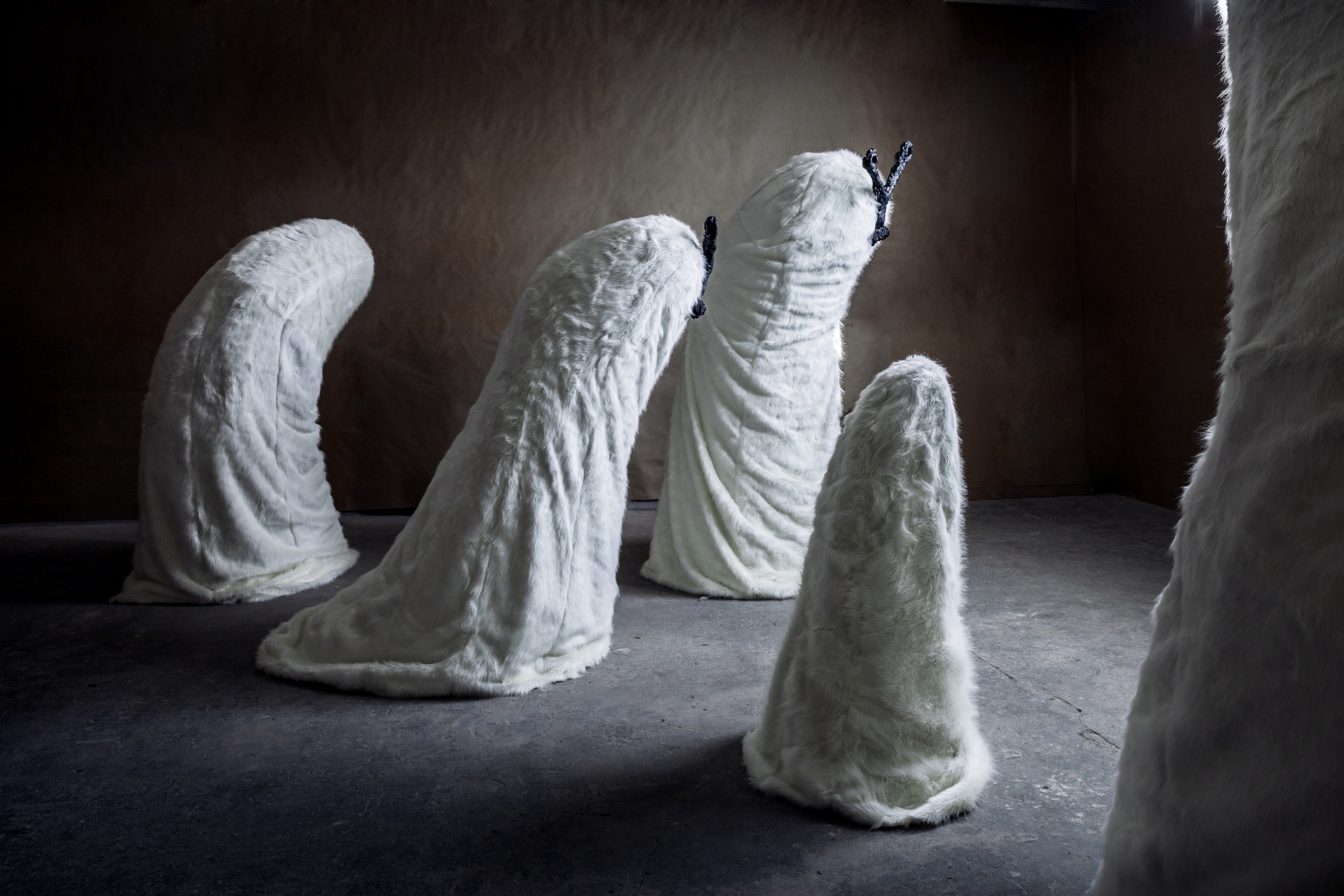
We Had the Same Dream
400 x 600 x 800 cm
sounds of frogs, metal, fake fur, synthetic resin, electronic components
2013, Warsaw, Poland
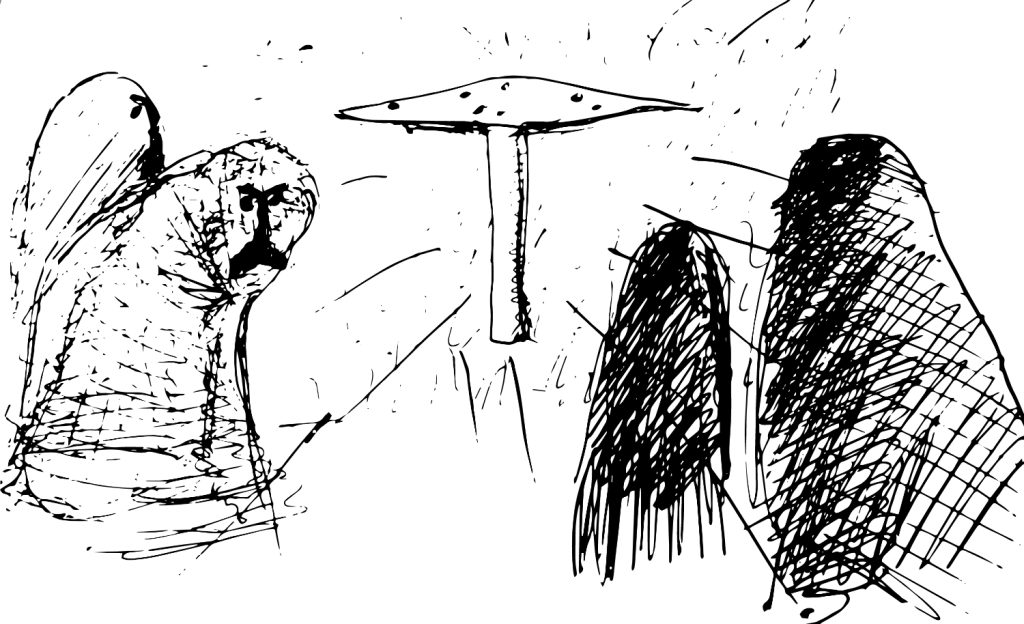
You can find yourself in the same dream and dream it differently.
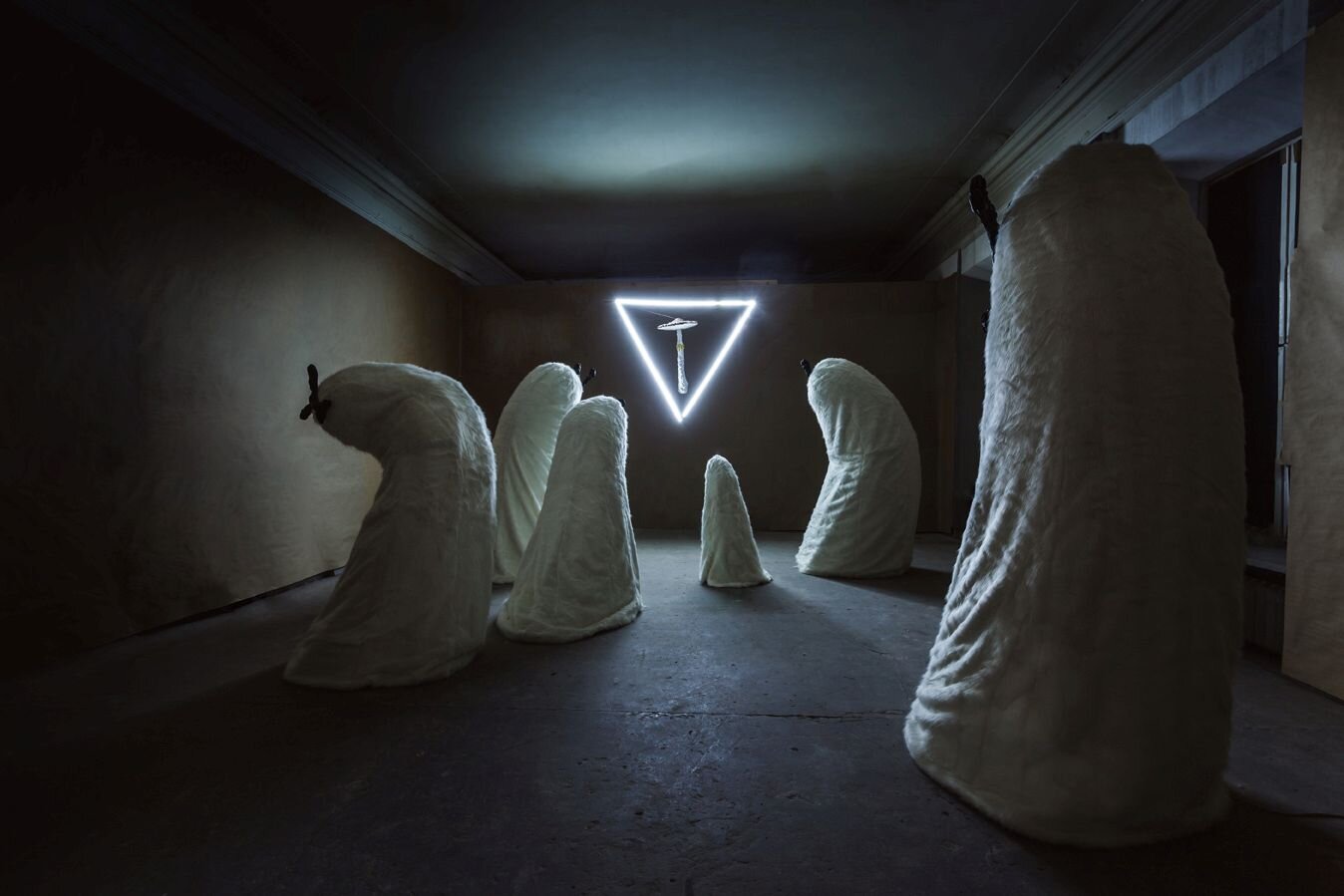
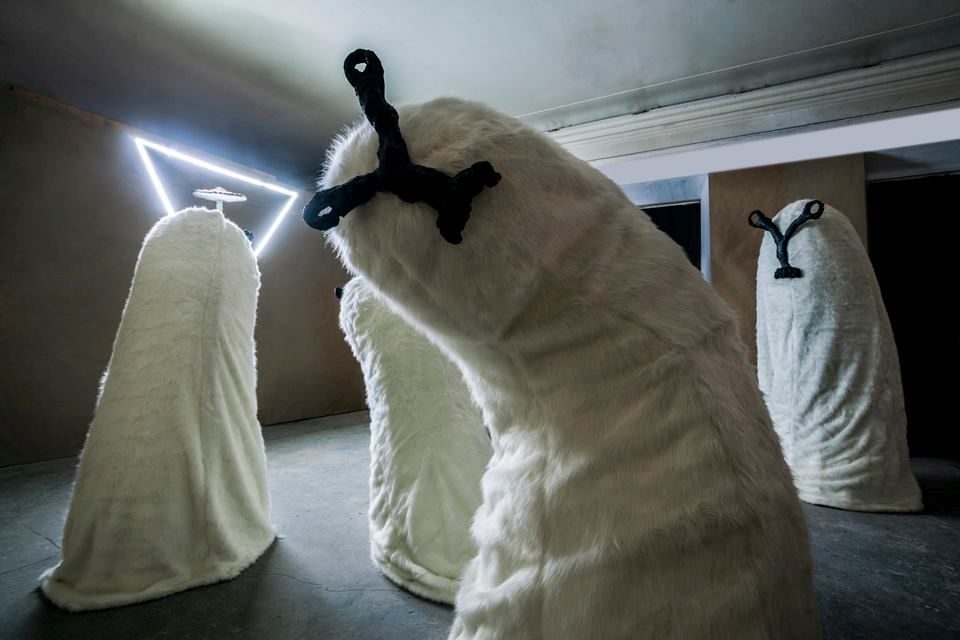
We Had the Same Dream constructs a reality that cannot be entered as a neutral observer. Each person crosses its threshold separately, wearing a costume that makes them resemble the figures already there. The costume is an attempt to enter an alien order anonymously — to step into a world already underway and briefly materialise within it as one of its possible presences.
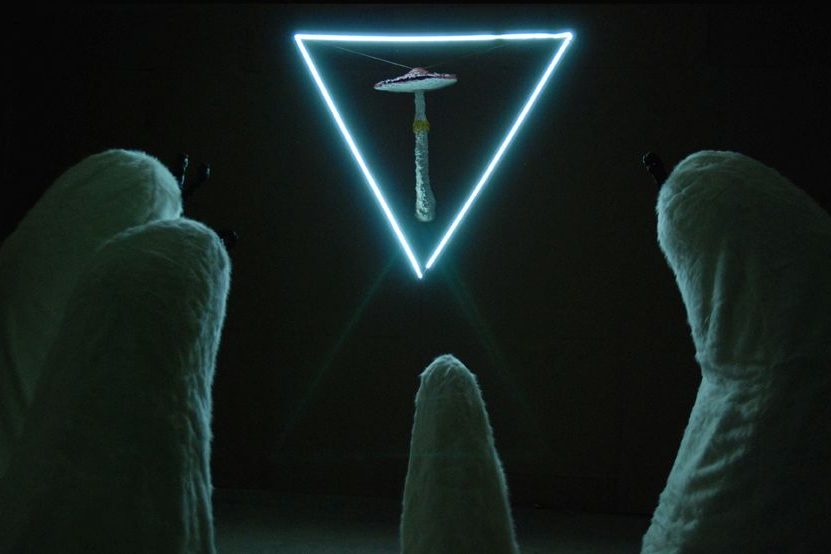
Once the threshold is crossed, ordinary points of reference are no longer of use. The only light comes from a triangular halo surrounding the fly agaric. The same centre towards which most of the figures are turned is also the condition of visibility for the entire situation. It organises attention while determining what can be seen at all.
The space is filled with the loud, relentless rhythm of frog mating calls. The sound is not a background. It takes over attention, imposes its own rhythm and makes distance increasingly difficult to maintain. Combined with darkness, scale and the strangeness of the situation, it does not represent another reality; for several minutes, it establishes one as dominant.
There is no time for detached observation.
The person falls into a situation already underway.
The figures remain focused on a single centre. Their shared gaze may evoke a dream, a trance, a ritual or a state of collective anticipation, but none of these explains the situation.
The elements of this world do not resolve into a single closed code.
The person can slip into the situation, remain unrecognised for a moment, enter its rhythm.
One figure, however, does not look towards the shared centre.
It looks at the newcomer.
The remaining figures share the same direction of attention.
One sees something else.
That is enough.
Successive visitors appear within the same reality. Each enters it as a distinct presence. There is no one there to cue a response, suggest a reading or establish a shared point of reference.
The conditions remain shared. The experience does not.
This tension does not end at the threshold of the work. The same reality can encompass everyone without thereby becoming one and the same world.
Once you leave, the conditions change. The principle does not.
We Had the Same Dream compresses this state into a few moments, a few minutes. Light, sound and scale organise perception until the reality left outside ceases to exist.
The space does not need to change.
A shift in gaze is enough.
Entering one at a time is not a mode of presentation. It is one of the work’s fundamental mechanisms.
Each crosses the same threshold.
Each enters the same world.
Each dreams it separately.