
Home
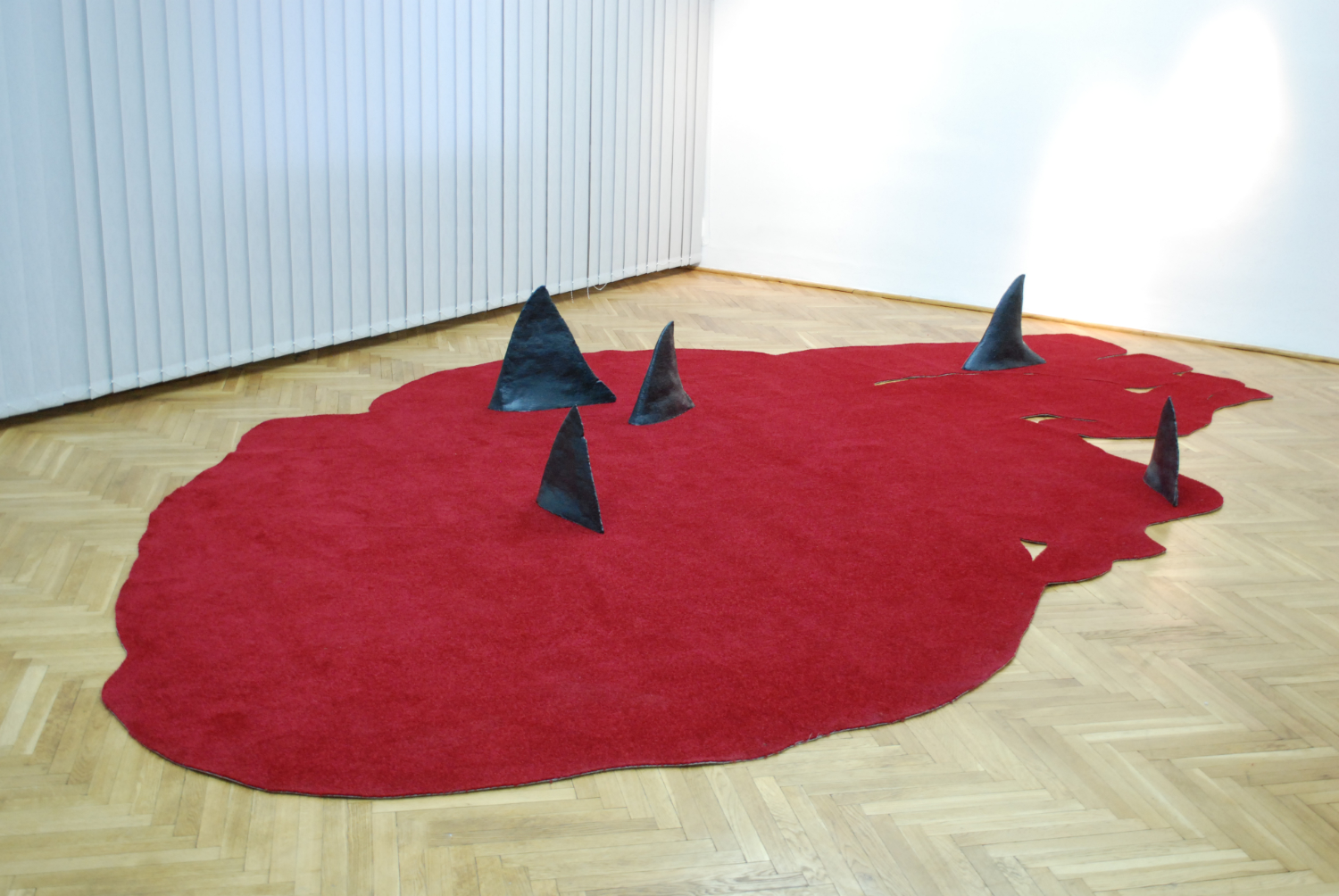
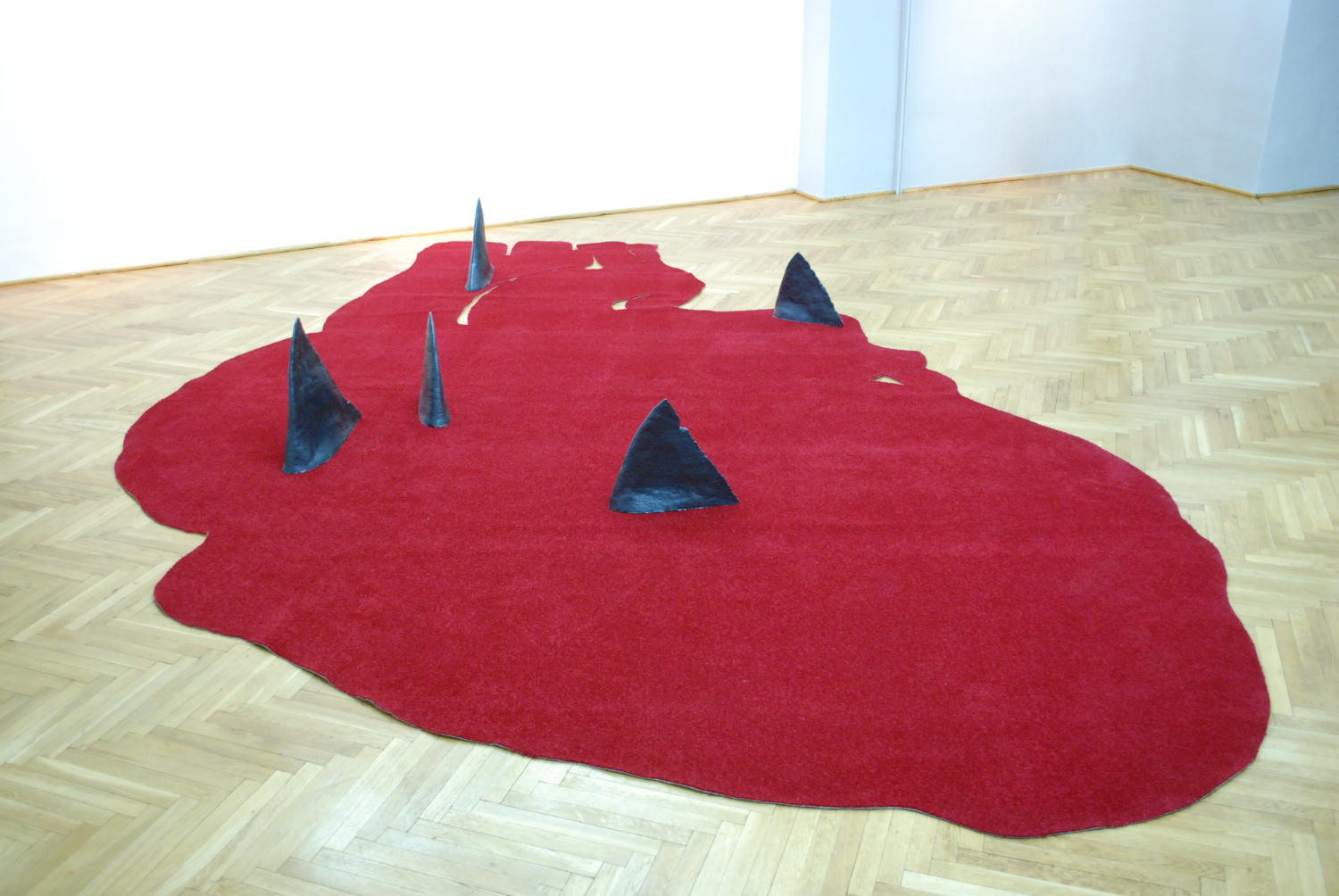
500 x 300 x 50 cm
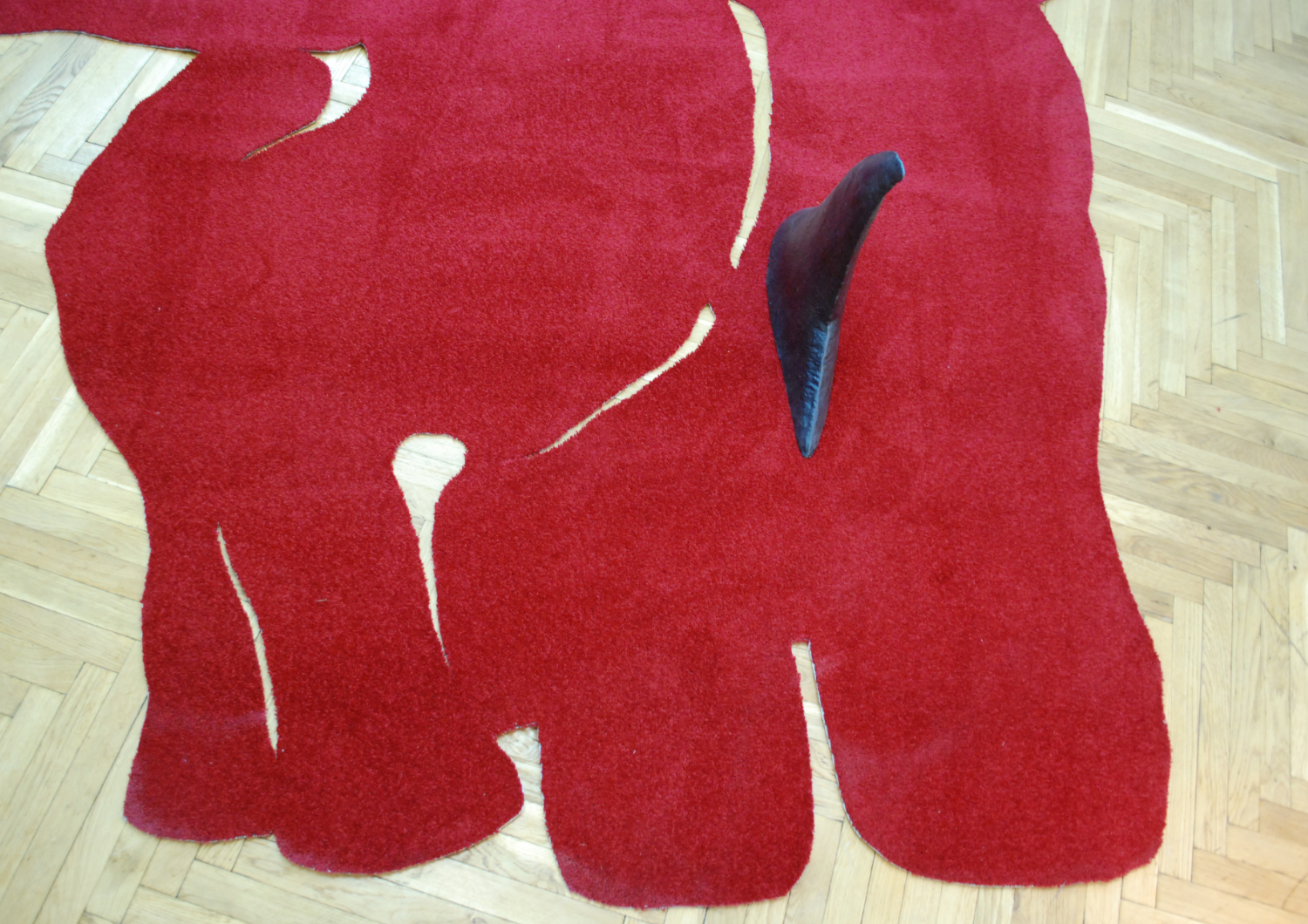
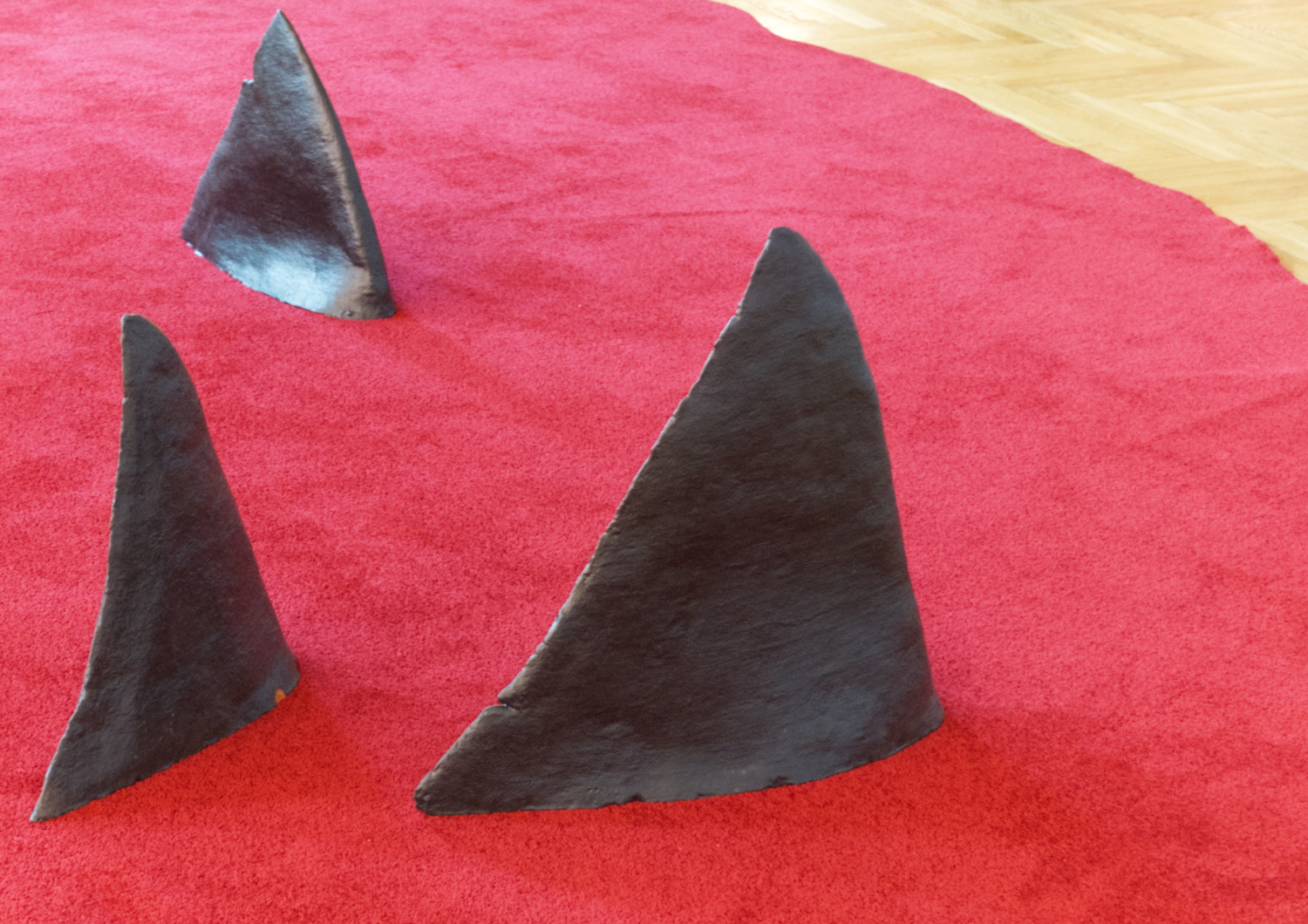
ceramic, carpet
2011, Warsaw, Poland
Before we can name the world, judge it, or defend ourselves against it, the world has already left its first marks on us.
Home is one of the places where that inscription begins. At that stage, home is not yet a memory. It is a condition in which the first measure of closeness, safety, dependence and threat is established. At the beginning of life, we do not yet have the distance required to separate an event from ourselves. What happens is not merely remembered. It enters the material from which our image of ourselves and of others later takes shape.
That material is as sensitive as paper to ink. A mark can be made instantly; removing it is not the same process in reverse. It can later be overwritten and covered by successive layers of experience. The paper, however, never returns to its state before the inscription.
Adulthood does not give us a new sheet. It works on the same one.
This is why the memory of home is so ambiguous. What we later call a good childhood rarely exists as an image without scratches. Nostalgia has its own work to do: it arranges, smooths, selects. It can create a surface far calmer than the material beneath it.
At the same time, there are experiences that cannot easily be absorbed into any coherent narrative. They can remain in anabiosis for years, almost invisible. Sometimes the slightest impulse is enough to bring something that seemed long distant back just beneath the surface.
It does not return as a faithful reconstruction of the past. What returns instead is the pressure of what happened: the way it shaped fear, trust, the need for closeness, or the need to escape. An event may belong to the past while its consequence continues to act in the present.
Not every first inscription is made in a home. Sometimes it is precisely the absence of one that leaves the deepest mark.
Home promises safety. Memory is under no obligation to keep that promise. A return can therefore be a movement towards what we desire and, at the same time, towards what we have learned to protect ourselves from.
What was meant to be a shelter may be only a surface. Beneath it may remain the very thing one had to flee.
The most difficult experiences do not always remain on the surface of memory. Often it is precisely the most enduring that learn to disappear. What disappears from the image does not necessarily disappear from the body. Some experiences outlive their own memory.
They remain deeper within the structure. They wait motionless until something wakes them.
Or until they grow hungry.
When they return, they do not reconstruct the past. They restore its capacity to wound. What was meant to belong to childhood regains the temperature of the present.
Some memories return as images. Others return as wounds.
One can spend decades adding new sentences to the first inscription. One can change its meaning. One can learn to live against it. But one cannot make it never have been written.