

If there is anything sweet hereafter it will be a measureless fortune
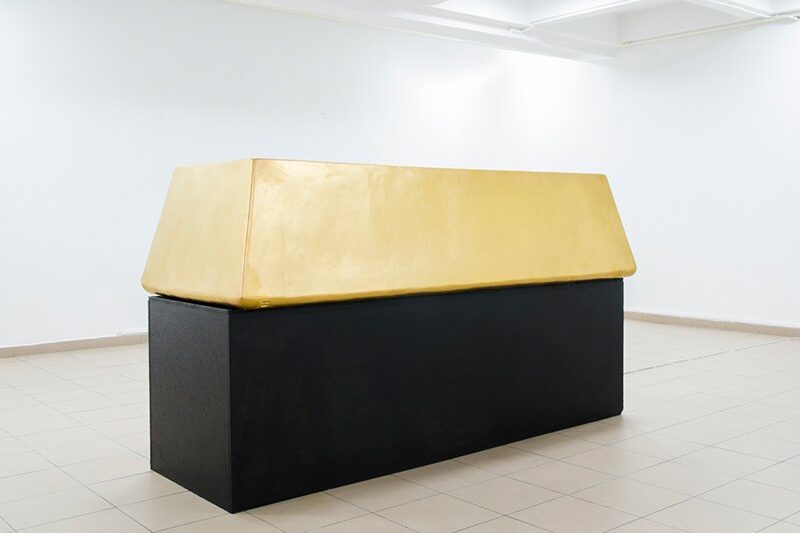
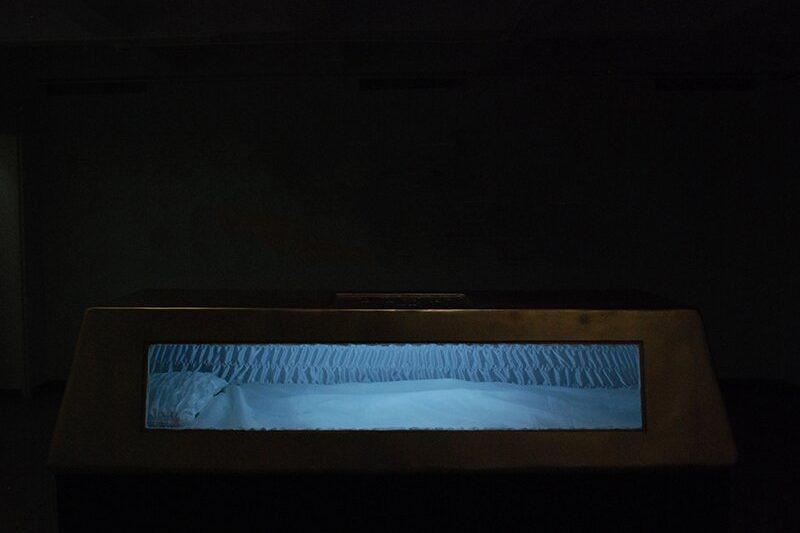
210 x 80 x 50 cm
synthetic resin, Perspex, fabric, electronic components, wood
2013, Warsaw, Poland
What if the most effective form of loss is not squandering, but deferral?
A significant part of life is organised around the promise of future compensation. Whatever we deny ourselves now is expected to be repaid later — in whatever form we desire. The present comes to be treated as a resource that can be consumed because its true meaning is expected to reveal itself only later.
Paradoxically, the religious promise of salvation and the economic logic of accumulation do not merely resemble one another; they require a similar organisation of time. One moves the reward beyond life, the other — beyond the present.
Both the promise of heaven and that of financial security are built at the expense of the only time we actually possess.
Health, energy and youth can be converted into capital. At first, the exchange appears rational: what is transient is transformed into something that can be stored, counted, multiplied and transferred. Later, capital returns to the body as an attempt to limit the consequences of what was consumed in its accumulation.
Money returns to circulation. Time does not.
Capital can continue where the body cannot. It can pass between owners, change form, be divided or reinvested. The body has no equivalent mechanism of transfer.
The system does not need the owner in order for their property to persist.
But this does not end the problem. Property outlives its owner only because it can cease to be theirs. Even the place intended to hold our body does not belong to us forever.
At this point, success and loss cease to be opposites.
Accumulation can be fully successful precisely when the subject for whom it was meant to matter is no longer necessary for its continued existence. Death does not destroy the mechanism. It merely removes the one who was ultimately meant to benefit from it.
The religious promise occupies a similarly peculiar position. Its greatest payout is located precisely where empirical verification is no longer possible.
Its truth is not decisive here. The mechanism does not require certainty.
Each decision can be rational on its own. Only in their sum does a possibility emerge that none of them need contain individually: one can spend an entire life postponing life until later.
If there is indeed anything sweet hereafter, its volume must exceed the limits of imagination.
Otherwise, the promise itself becomes too small.