
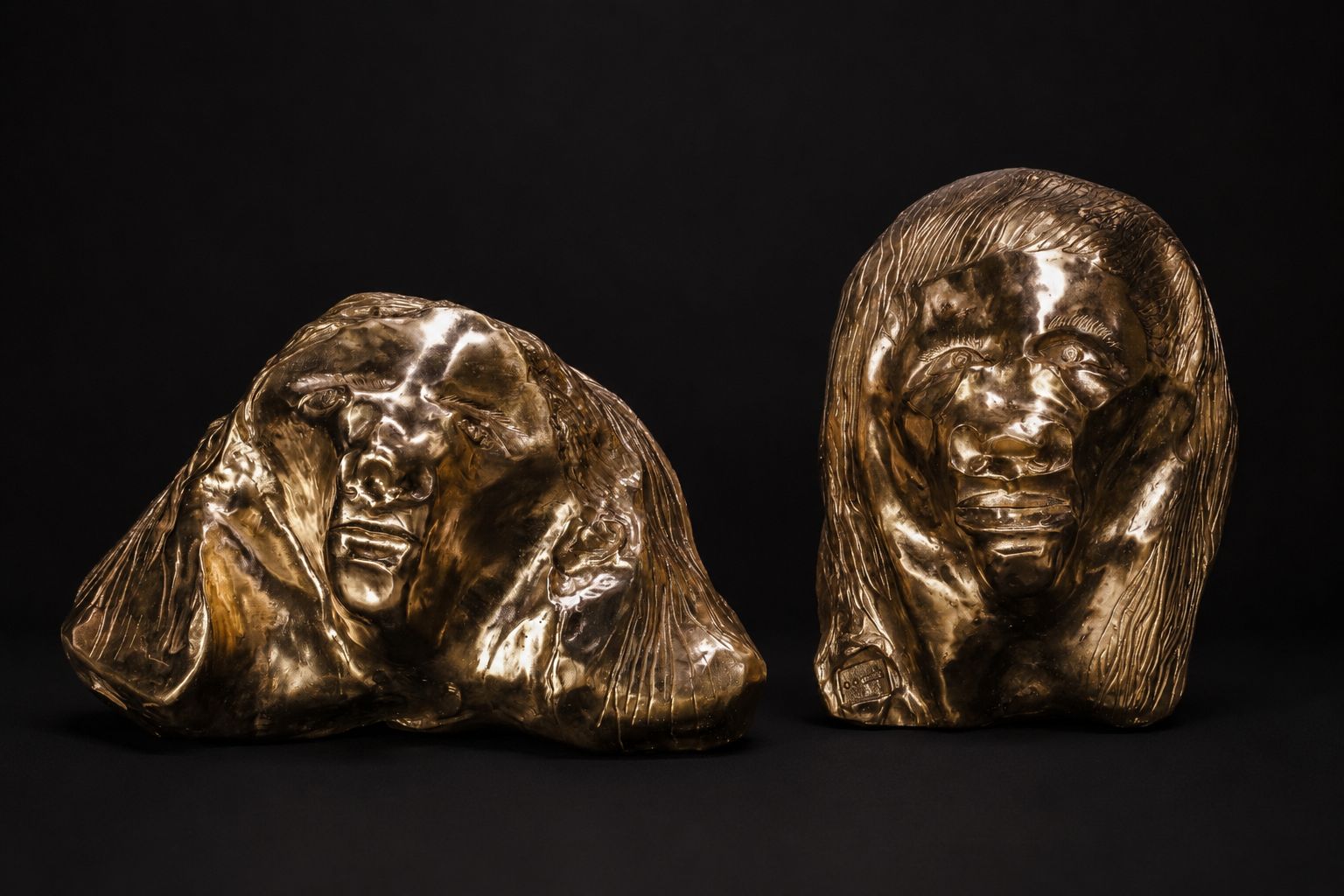
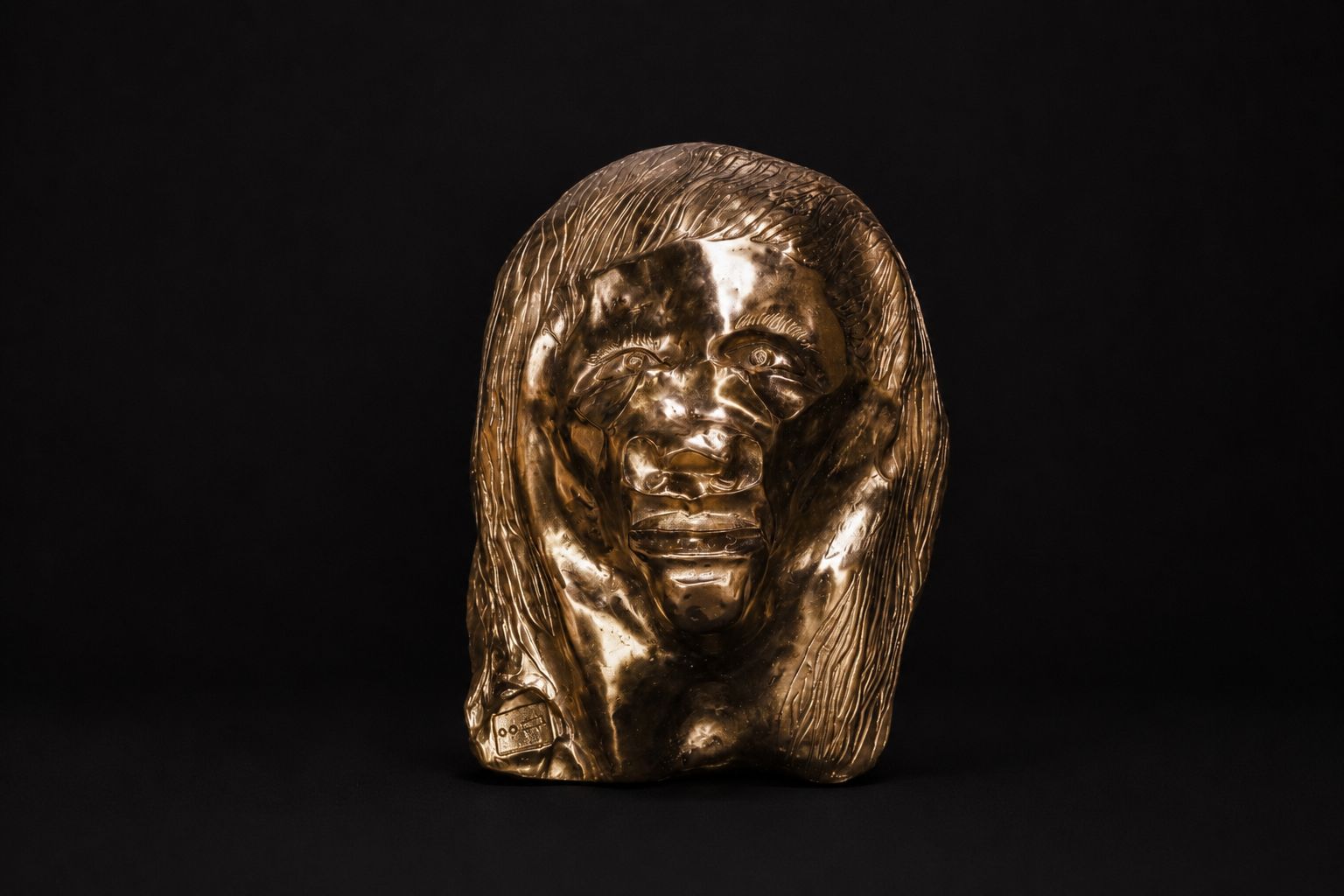
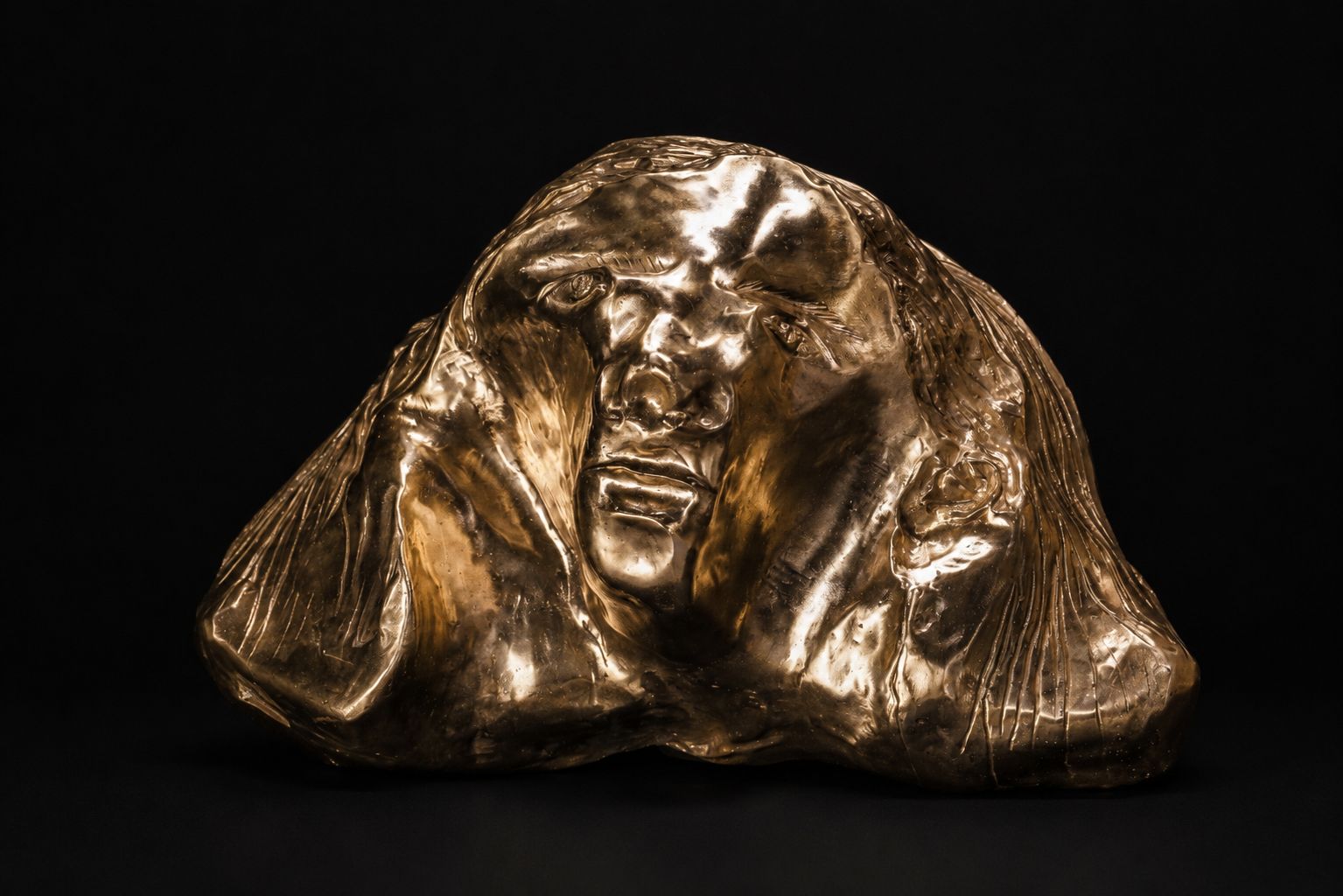

An extremely exotic flower that grows in the garden but does not belong to this world
41 x 27 x 17, 34 x 25 x 16 cm
bronze
2018, London, UK
Photos: Chang Dung Dung 張東東i
The work constructs a problem of recognition rather than exclusion. The bronze masks employ the visual language of objects that seem already invested with significance — archaic, rare, culturally charged — while remaining contemporary works whose status has yet to be established. The tension therefore lies not in whether they are valuable, but in the mechanisms through which value becomes recognisable in the first place.
A work can emerge entirely within the field of art and still remain outside its recognition. Not because it exists beyond the system, but because belonging to the system and being recognised by it are not the same thing. Existing criteria may fail to register it at all unless it can first be rendered in terms the system already recognises and validates.
Recognition is therefore not a neutral response to the quality of a work, but an active process. Institutional validation, critical framing, provenance, market circulation, cultural narrative and time do not merely register value — they help produce the conditions under which it can be recognised, reinforced and sustained.
This creates a fundamental instability between the force of a work and the status it acquires. Status does not necessarily correspond to what the work itself contains. Once established, however, it can gradually come to appear as though it had belonged to the object all along. Conversely, an object can accumulate meaning through the structures that surround it, until the boundary between what the work itself contains and what has been produced around it begins to blur. It is precisely in this shift that status ceases to be merely an effect of recognition and becomes one of its mechanisms.
Recognition does not conclude the process; it begins to reproduce it. Once established, it becomes one of the conditions for further recognition. Institutional presence legitimises further institutional presence; market value begins to function as an argument for significance; an existing narrative makes the construction of the next one easier.
The paradox of the title lies precisely here. The flower does not grow outside the garden. It grows in it. The same environment that makes its existence possible may simultaneously be unable to recognise it as belonging to its own order.
Its strangeness, then, need not reside in the flower.
It may reside in the garden.