
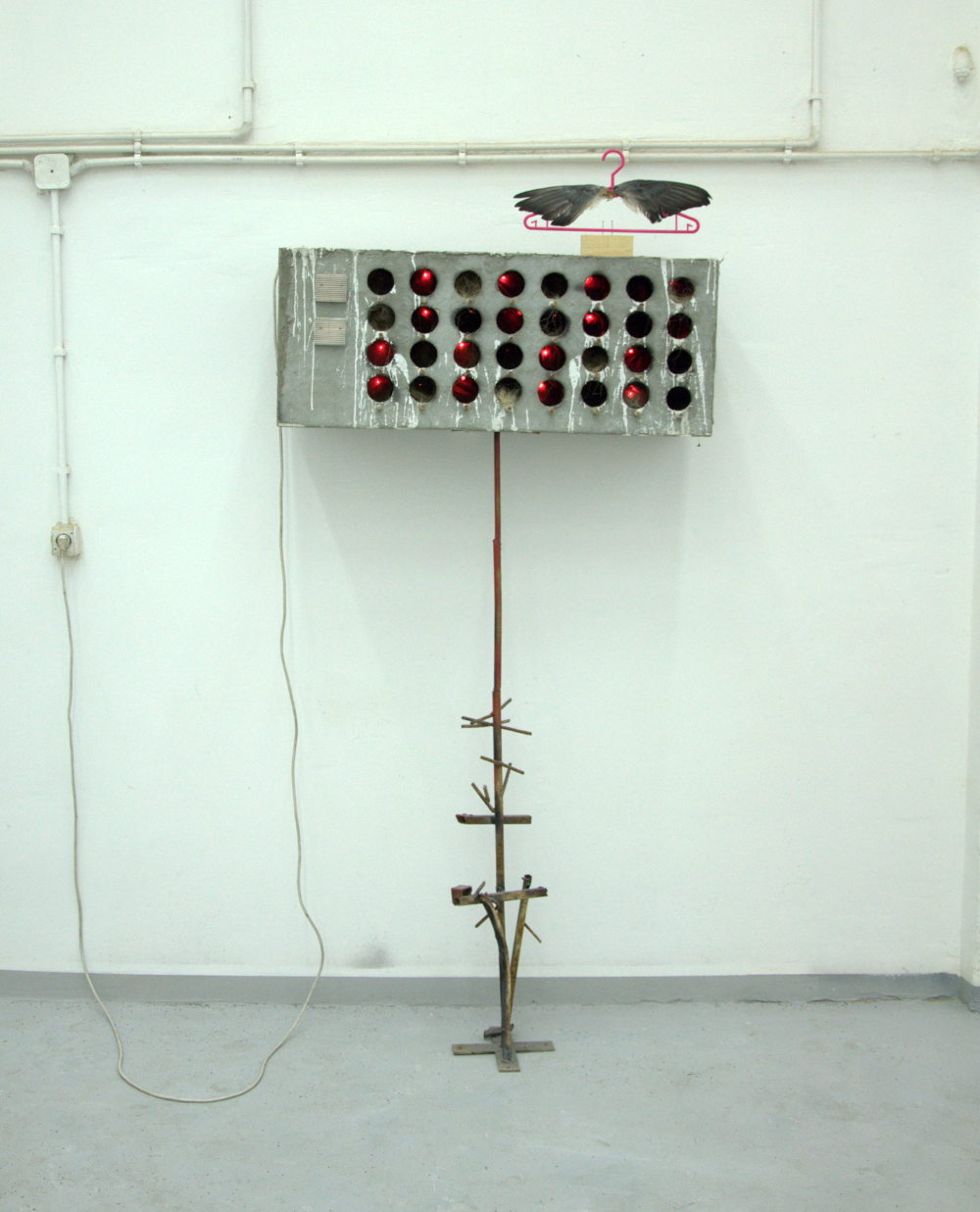
Hotel for Birds
200 x 140 x 60
wood, cement, plastic, metal, electronic components,
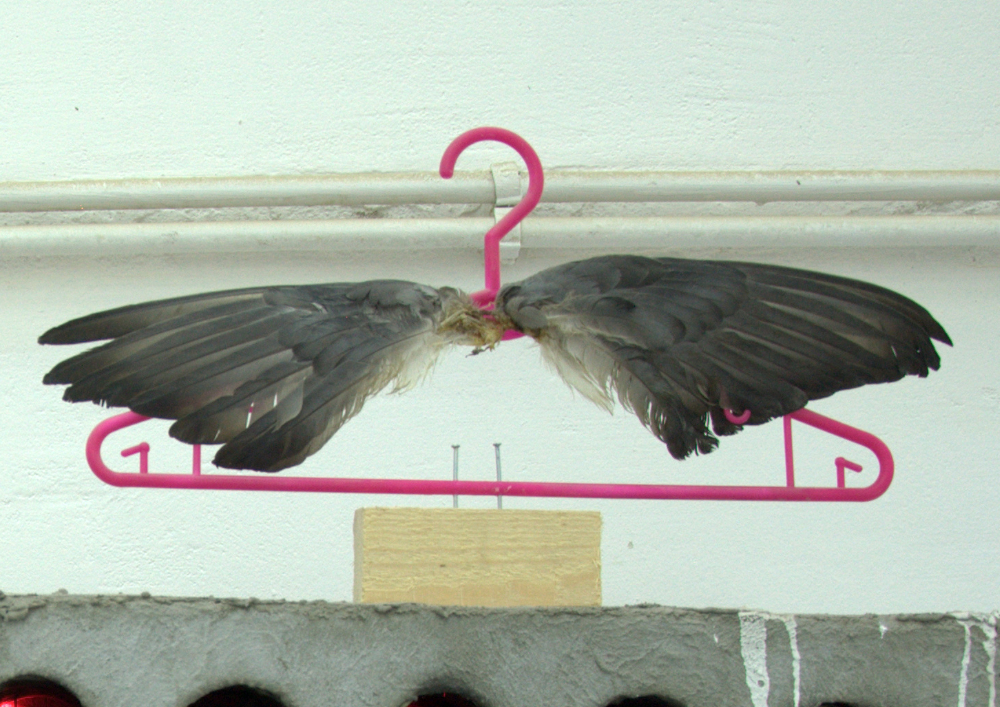
wings of pigeon
2011, Warsaw, Poland
The most effective system of exploitation does not need to take freedom away. It is enough to organise life in such a way that the possibility of exercising it becomes less and less part of everyday life.
Work appears here not as a single activity, but as an order capable of subordinating even what seemingly lies outside it. Free time, rest, housing and recovery are drawn into the same cycle. Home is no longer the opposite of the workplace. It becomes its functional infrastructure — a space sufficient for the body to recover its capacity to re-enter the cycle of production.
The system must keep the inhabitant alive precisely because it intends to continue using them. It cannot exhaust them completely. It therefore leaves just enough space, time and energy for continued functioning. Rest does not interrupt exploitation. It prepares for its resumption.
The wings remain. Hung on a hanger, they are proof that the possibility of flight has not been taken away. Flight is not prohibited. It is displaced beyond the rhythm of everyday life — deferred until later, until free time, until a momentary exit from an order that itself determines the limits of that exit.
Freedom is displaced from practice into promise.
The wings are therefore not the opposite of the cage. They become part of the mechanism that allows it to function. The visible possibility of exit stabilises it more effectively than an absolute prohibition.
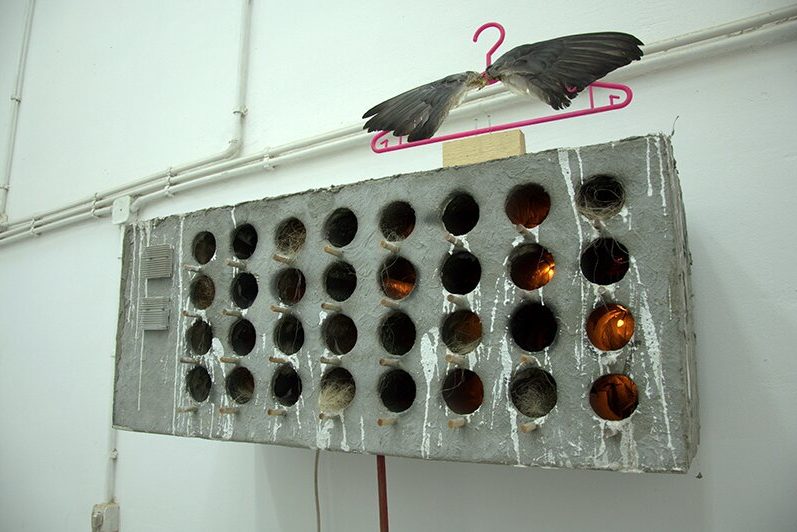
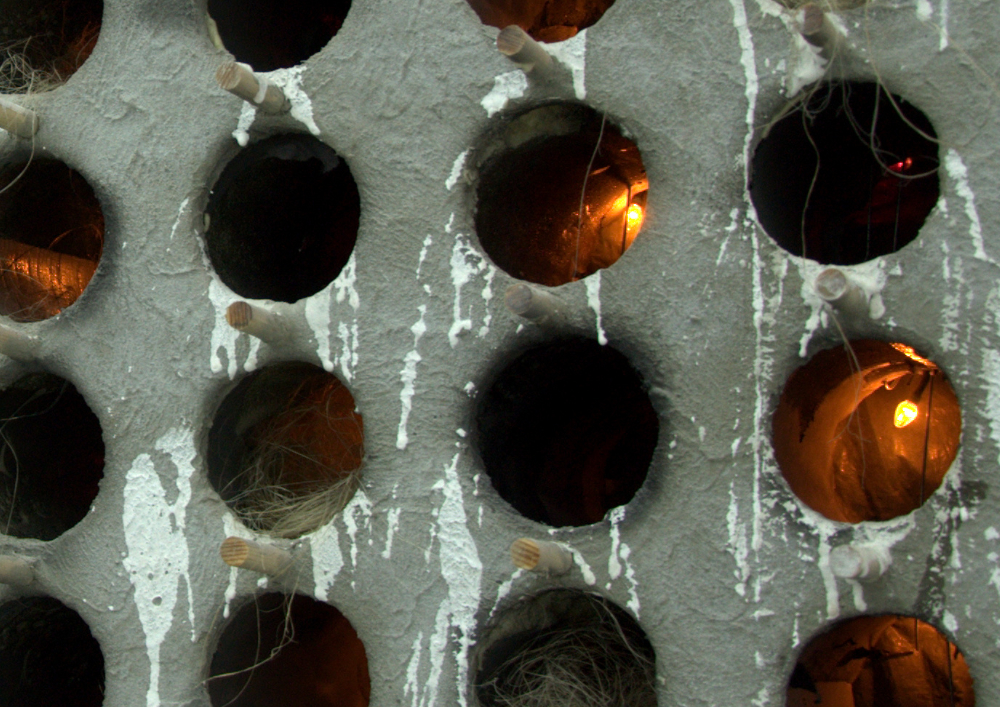
The individual is present primarily as a periodic signal of functioning. As long as the signal continues, the system registers them. When the signal goes out, another bird occupies the vacated cell.
Continuity belongs not to the inhabitant, but to the system, which outlives successive individuals and has no need for any one of them in particular.