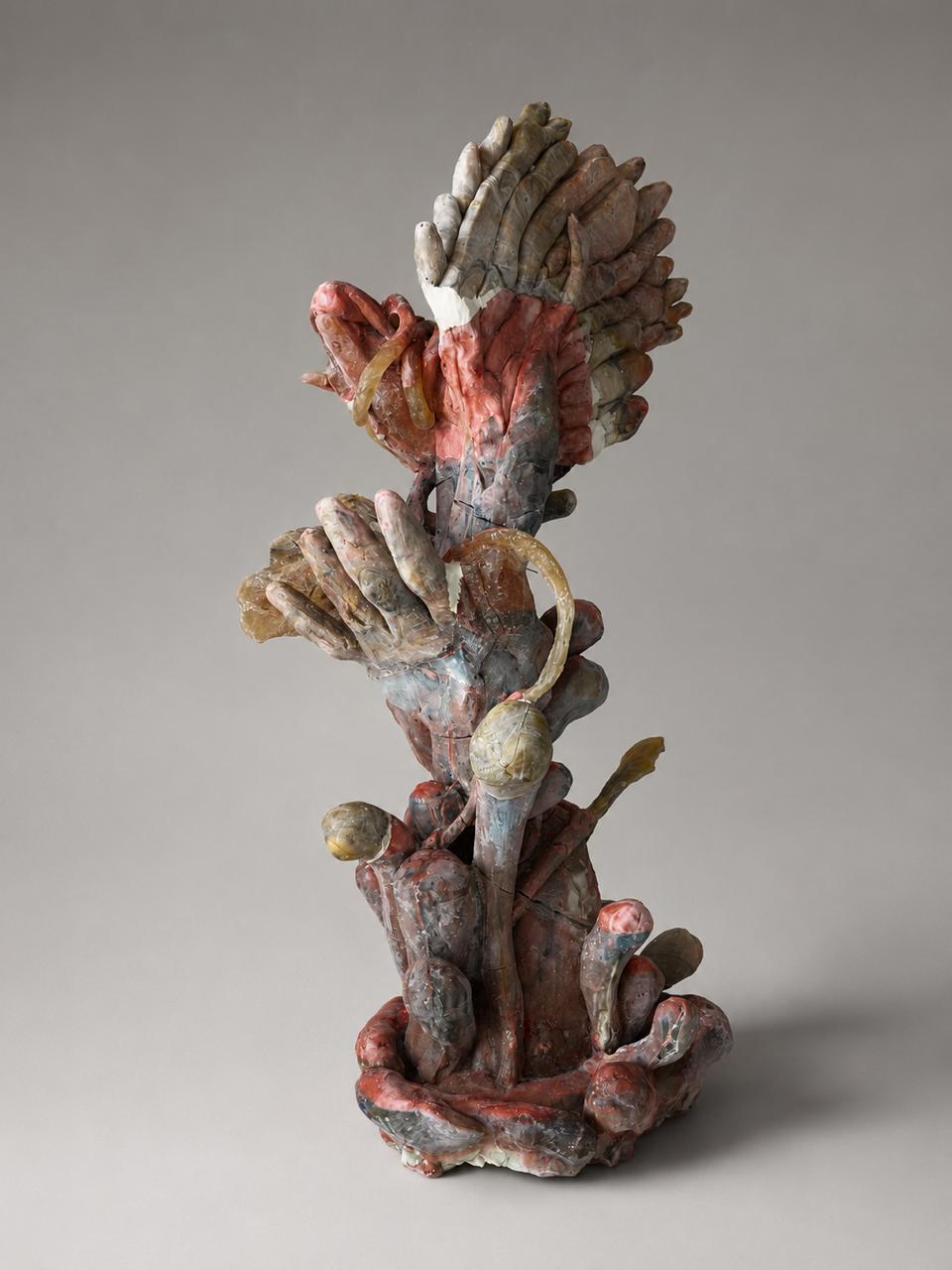
Error Space
53 x 20 x 29 cm
video, synthetic resin, metal
2026, London, UK/Łódź, Poland
Living abroad for many years has meant that a significant part of my relationships now exists through digital forms of communication. Over time, I became interested not so much in what technology makes possible, but in what it changes: the way a message is formed, transmitted, received, and remembered.
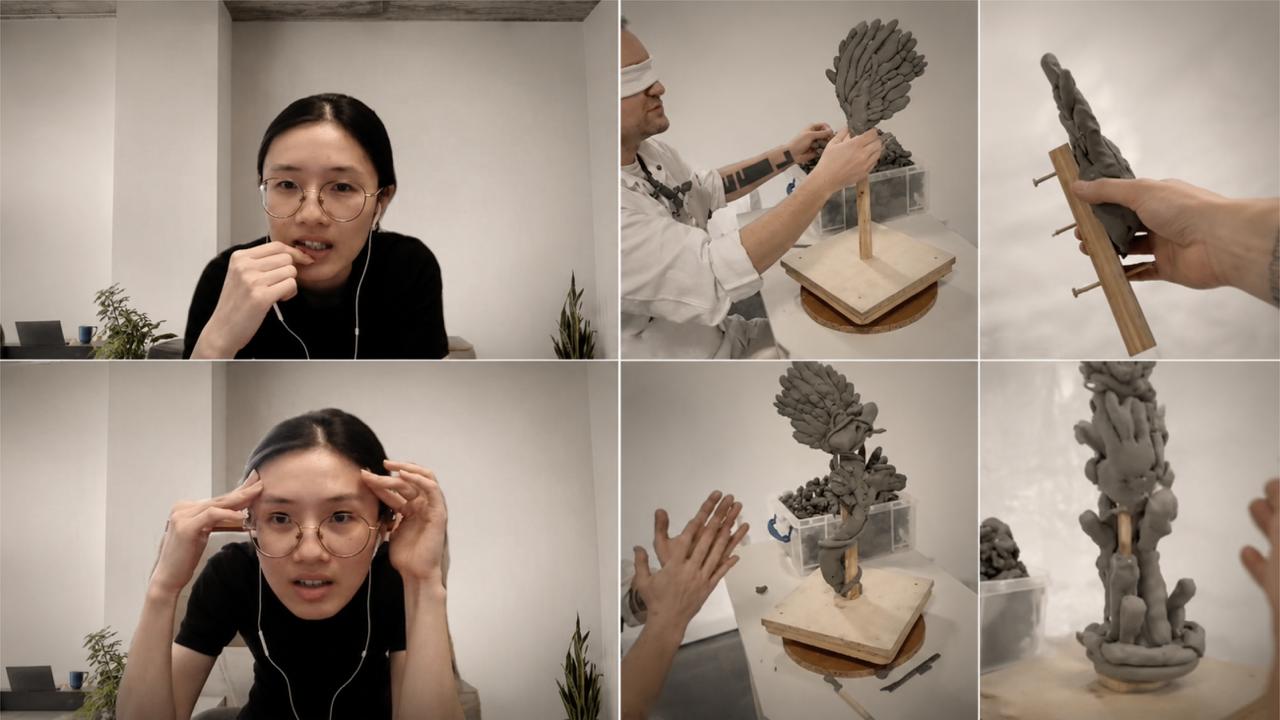
I invite people I know to take part in the project. During a video call, they describe something that exists in their imagination but that I cannot see. I have access only to their words, their voice, their pauses, and my own attempt to understand. Working from these alone, with my eyes covered, I form an object in modelling clay.
The entire situation takes place within a monochromatic white space, which reduces visual distraction and leaves the materialisation of the communicated idea at the centre. By depriving myself of sight, I relinquish direct control over the emerging form. Between the original idea and its physical outcome lies a sequence of shifts: digital mediation, language, perception, imagination, and the body.
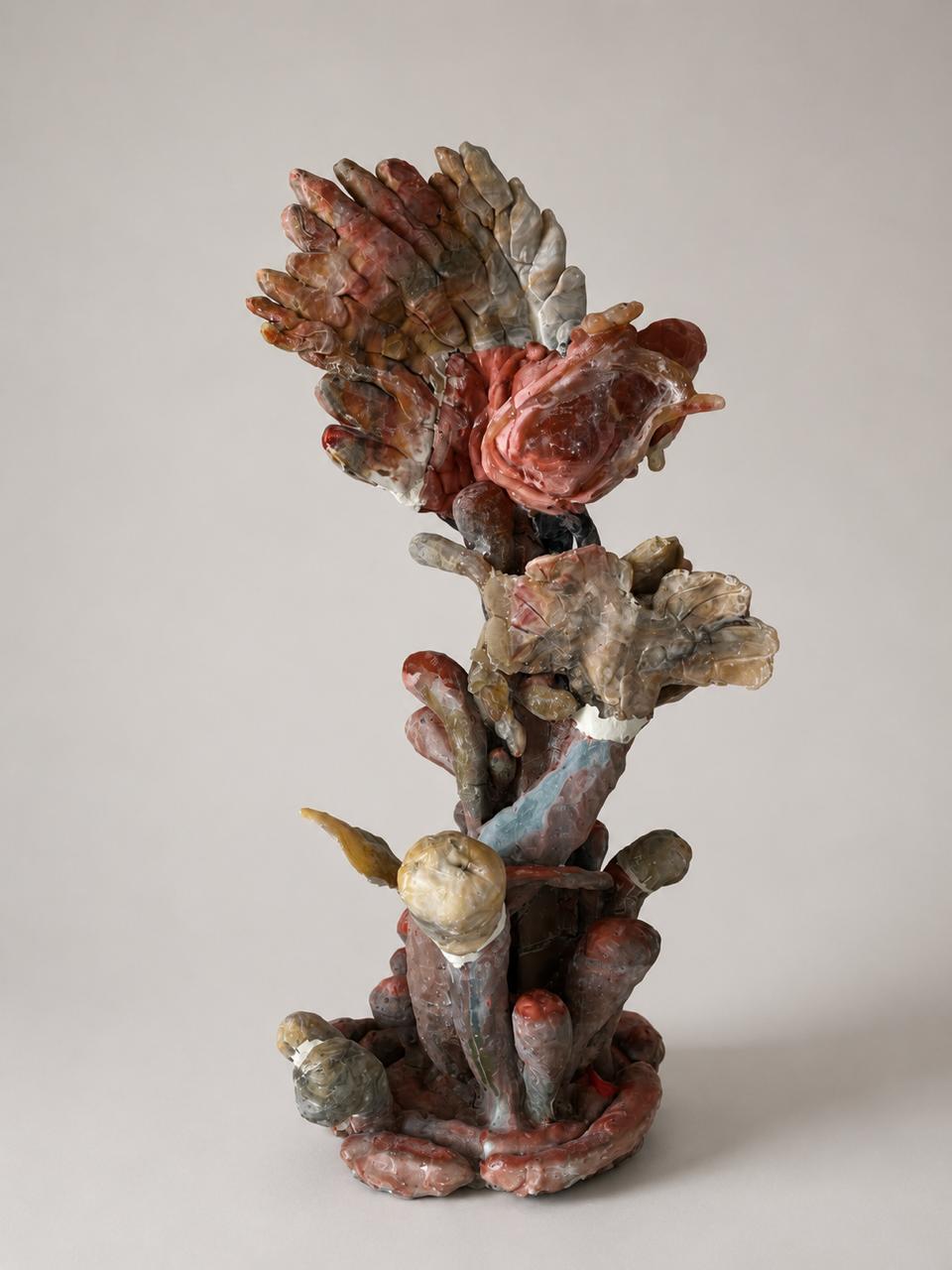
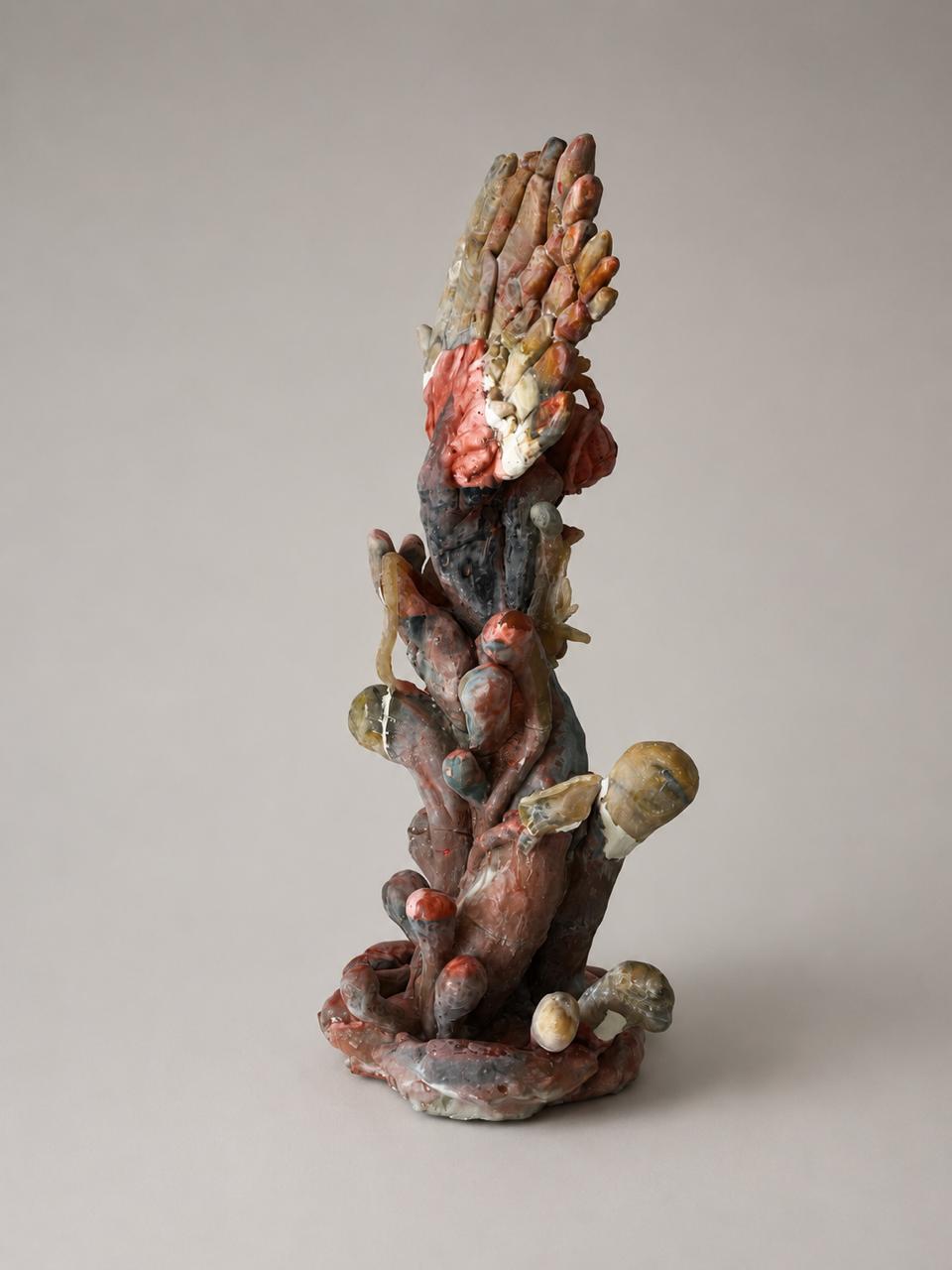
The resulting sculpture is not an illustration of the original idea. It is a material trace of what happened to it in transmission. The objects therefore also escape my own sculptural language – they emerge outside conscious aesthetic decision-making and retain something elemental, intuitive, and uncontrolled.
The video recording is an integral part of the project. I do not treat it as documentation of the sculpting process, but as an autonomous part of the work. The video call becomes a form of private performance: the presence of the camera and digital interface subtly alters the way we speak, look, formulate thoughts, and construct our own presence before another person.
The other person’s voice, my questions, hesitations, misunderstandings, and attempts to clarify meaning create a space between conversation, performance, and sculpture. Communication is revealed here not as a transparent transfer of information, but as a continuous process of transformation.
The original sculptures are subsequently cast. Reproduction introduces further differences: material changes, imperfections, and elements that, for technical reasons, must be produced separately. I leave these shifts visible. Casting becomes a reflection on the way memory operates – when recalling a conversation, an encounter, or an experience, we do not recover it in its original form; we reconstruct it.
Every memory is another cast of reality – similar, but never the same.
Miscommunication, usually understood as a disruption to be eliminated, is treated here in the opposite way – as artistic material. I am interested in the moment when the loss of information ceases to be merely a loss and begins to generate something that did not exist before.