How To Conjure Up Modern Art
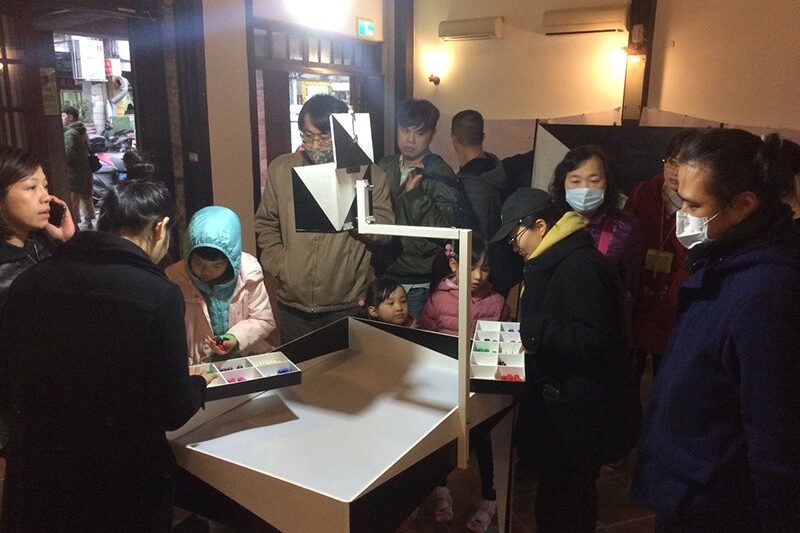
wood, paper, dice, drawing materials
2020, 剝皮寮歷史街區 Bopiliao Historic Block, Taipei, Taiwan
Every work begins before the first mark is made.
Begin with something that belongs to everyone.
Reduce it to a number.
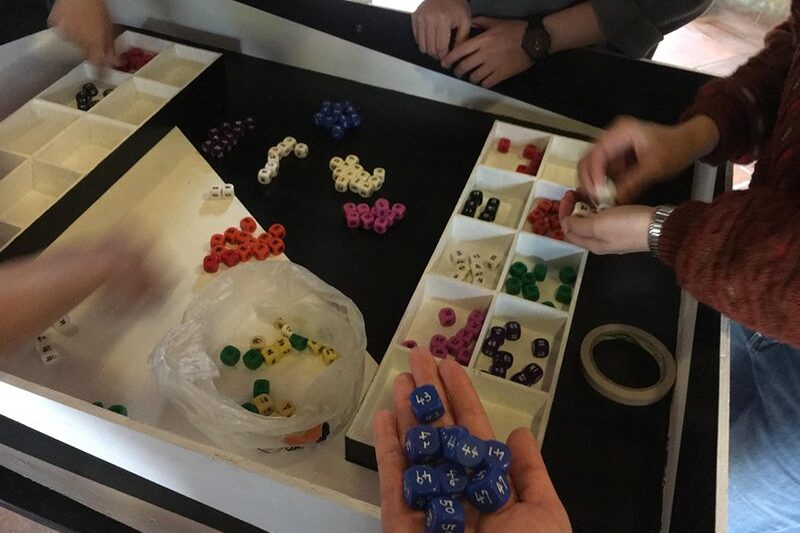
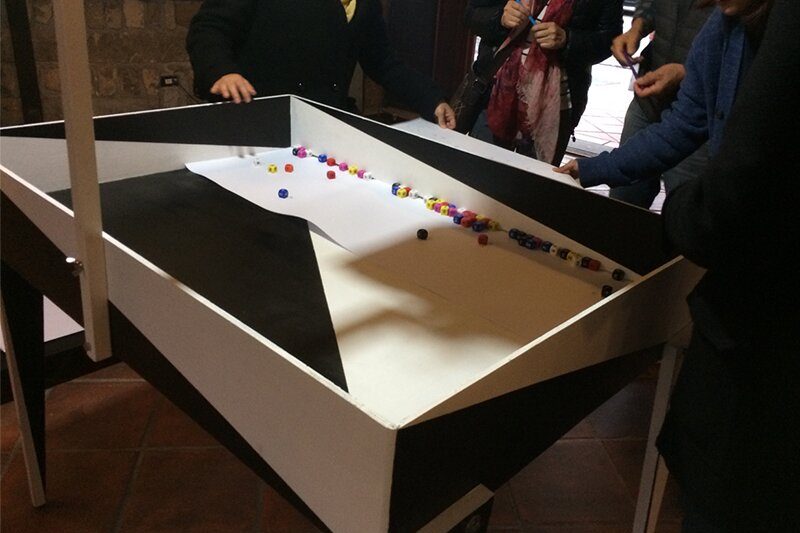
Translate that number into a set of dice.
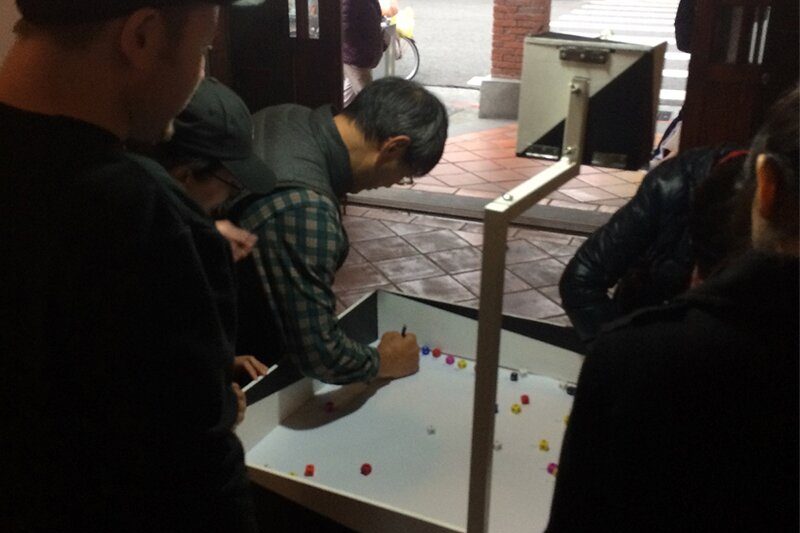
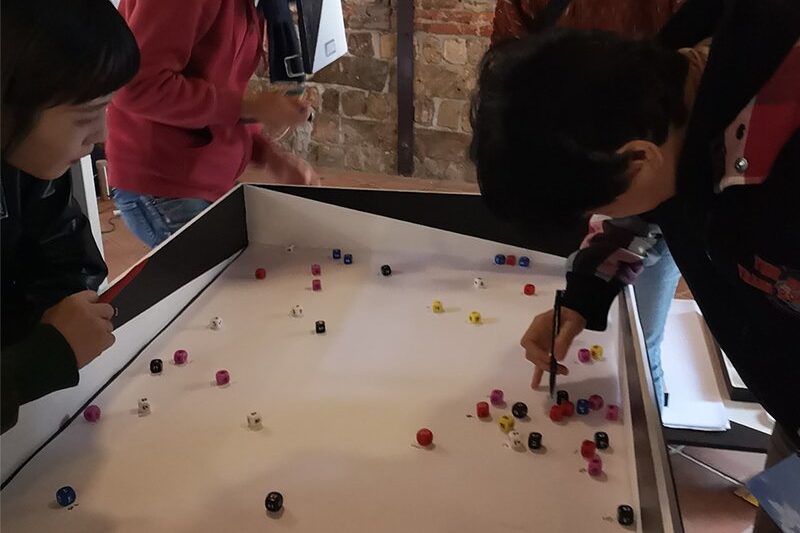
Release them onto a blank sheet of paper.
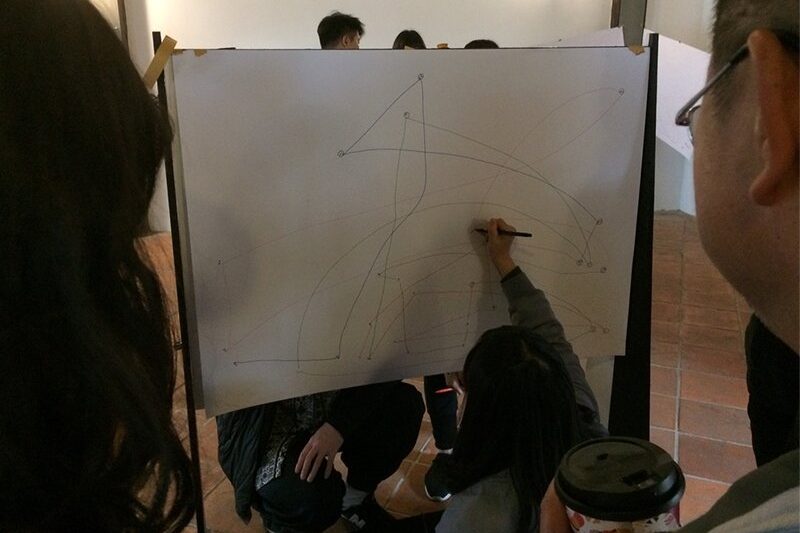
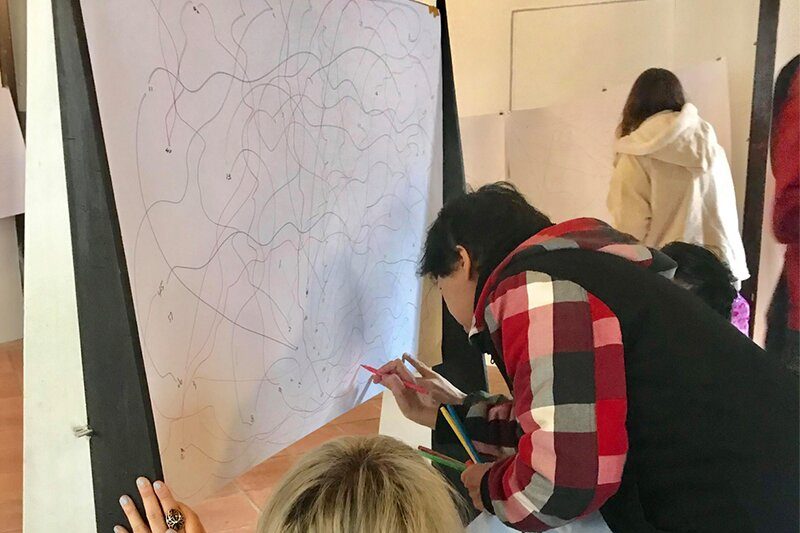
Mark where they fall.
Connect every number in ascending order.
From this moment onward, the procedure belongs to everyone. Every other decision belongs to its author.
The line may hesitate, accelerate, fragment, loop, disappear or wander. There is no correct way to draw it.
The rule remains identical. The drawings never do.
This sequence of actions formed the basis of How to Conjure Up Modern Art—a participatory project created for people experiencing homelessness in Taipei.
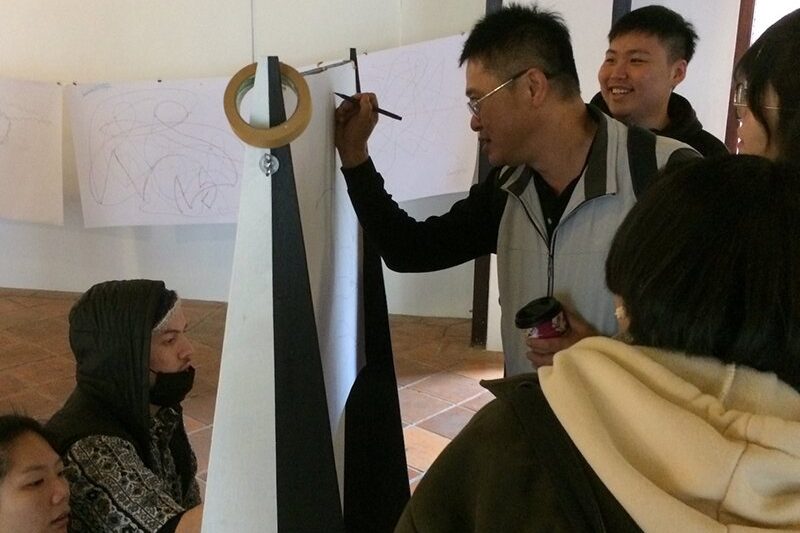
Participants were invited through posters placed in nearby Mengjia Park. The project took place in an open space within Bopiliao Historic Block, accessible both from the historic complex and from the surrounding streets of Wanhua. People experiencing homelessness worked alongside local residents, tourists and accidental visitors. Everyone entered the same space, followed the same procedure and participated under identical conditions. The work temporarily replaced social distinctions with a shared experience.
Every element of the installation was designed and built specifically for the project from discarded furniture collected throughout Taipei’s Wanhua district. Together, these objects created the conditions through which the procedure could unfold.
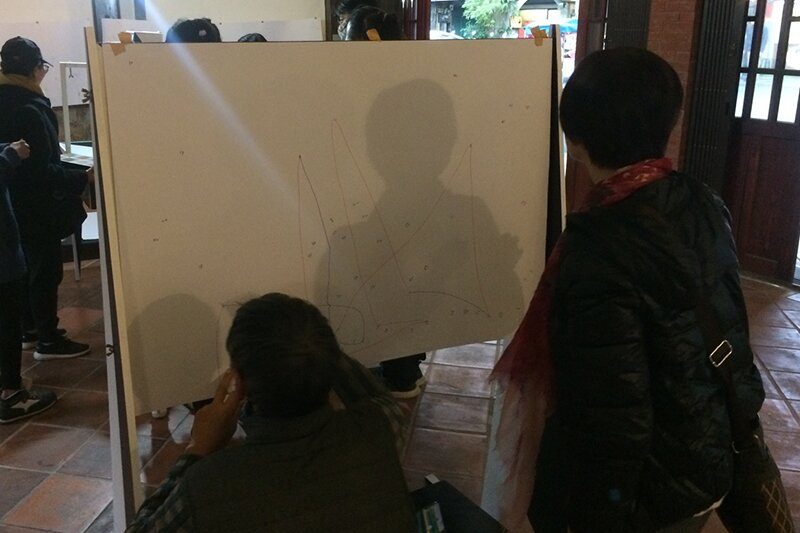
When the drawings were finished, participants were invited to spend time looking carefully at what they had created.
What do you see?
Animals.
Plants.
Maps.
Buildings.
Faces.
Memories.
Entire landscapes emerged from drawings that only moments earlier had appeared to be nothing more than numbered points connected by lines.
Only after these conversations did the meaning of the entire project reveal itself.
Every drawing had begun with a single personal fact.
In this project, it was the participant’s age.
One final question followed.
What would you think if you encountered this seemingly chaotic arrangement of lines on the wall of a museum?
The drawings remained exactly the same.
The answers rarely did.